Kapok Pillows files this question under Care, where every kapok topic on the site is mapped.
Quick answer
Each kapok fibre is a thin, waxy tube whose hollow centre is 80 to 90 percent air (Textile School). Your head presses those tubes flat, damp makes clumping worse, and the slippery fibres drift into packed lumps. In one lab test, a press of 100 kPa crushed most fibres into flat ribbons (Oriental Journal of Chemistry). A daily shake, squeeze and pat moves drifted fibre back. It cannot re-inflate crushed fibre, so lost height means adding fill.
This guide is for: people whose kapok pillow has gone lumpy or flat and who want to know what caused it before they wash it, sun it or throw it out.
Key Takeaways
Three points carry the whole page: what crushes kapok, what fluffing can reverse, and what most sellers say about washing it.
- Crushing is the part you cannot undo. In a lab study described in a review in the Oriental Journal of Chemistry, a press of 100 kPa crushed most kapok fibres from hollow tubes into flat ribbons. Fluffing moves fibre around. It does not re-inflate a tube whose wall has folded.
- Drift is the part you can undo every day. Kapok fibres carry a wax coating, as Textile School describes, so they slide past each other and pile into packed lumps. The 5-step shake, squeeze, pinch, pat and rest below, done on most mornings, spreads them back out.
- Most sellers say to keep the fill out of water. Of 10 product and care pages we read on 2026-09-25, 7 warn against washing the fill, 2 allow it if you dry it carefully, and 1 says nothing about the fill at all.
The first three sections explain the fibre. The fix only makes sense once you can tell a drifted lump from a crushed one, because they feel alike in the hand and need different treatment. The middle two sections are the routine itself: the daily fluff, then the deeper method for lumps the fluff cannot reach. The last three cover washing, sun and dryers, and the point where adding fill or replacing it is a better use of your time than more fluffing. The common questions at the end give you the short versions.
Why does kapok clump in a pillow?
Kapok clumps for three reasons at once: the hollow fibres flatten, damp air slows their recovery, and slippery fibres drift together.
A kapok fibre is a single plant hair from the kapok tree's pod: a sealed tube with a thin wall and a large hollow centre. A review in the Oriental Journal of Chemistry describes its smooth, wax-coated surface and reports a porosity of 77% (Oriental Journal of Chemistry). That trapped air makes a new pillow feel light. It is also what you lose when the fill packs down.
Three things go wrong, usually together. Pressure flattens the tubes, so each fibre holds less air. Moisture slows the spring-back, and a pillow spends hours under a warm, breathing head. And because the wax reduces how well fibres cling to each other (Textile School), fill slides away from your head and piles up at the edges. For why so much of the fibre is air, see what kapok is, and what a kapok tree is.
| Cause | What you feel | Does a daily fluff fix it? |
|---|---|---|
| Fibres drift to the edges | Lumps at the corners, a dip in the middle | Yes, mostly |
| Fibres crush under weight | The whole pillow sits lower | No, add fill |
| Fill stays damp | Heavy, slow to spring back | Partly, once dry |
| Fill was never teased apart | Hard knots from the first night | Only by hand, inside the case |
The right-hand column is this publication's judgement from the sources on this page. Sellers do not publish it.
What happens to the hollow fibre when you lie on it?
Under enough pressure the round tubes fold into flat ribbons, and each round of pressing leaves the fill a little less springy.
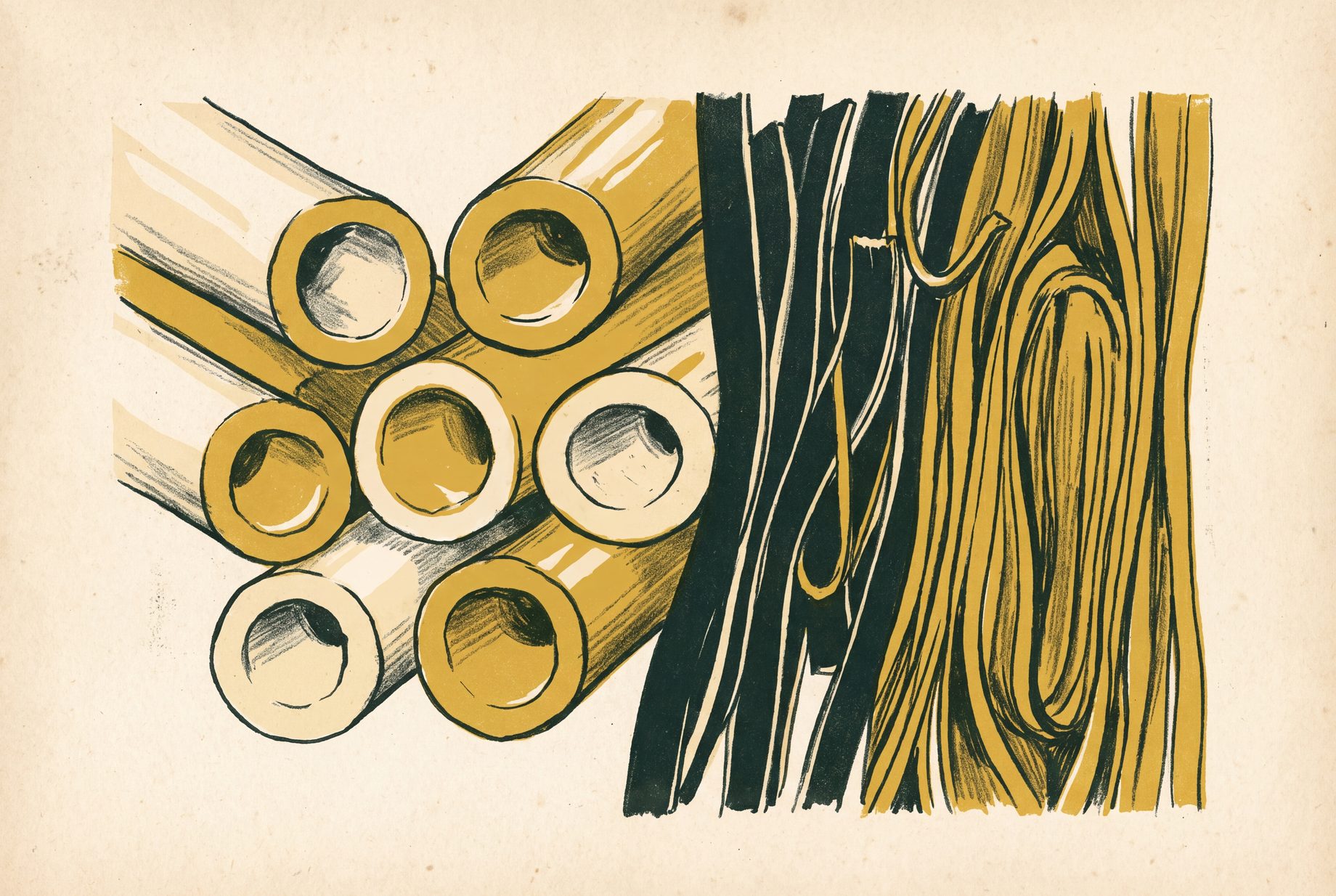
A review in the Oriental Journal of Chemistry describes a lab study that looked at kapok under a scanning electron microscope after treating it three ways: dry at 15% relative humidity, wet at 99%, or under a press of 100 kPa. The fibres started out hollow and circular. After the press, some were partly or totally crushed into thin ribbons, and the review says the pressing changed the hollow structure of most of them (Oriental Journal of Chemistry). A lab press is not a head on a pillow. Read the result as the direction of the effect, not a nightly rate.
Sellers describe the same slow change in everyday use. Satara Home, which says it has sold kapok pillows for many years, notes that the fibre compacts naturally over time and that fluffing helps bring some of it back (Satara Home).
So every night pushes a small share of your fibre toward flat. That share does not come back when you shake the pillow, because the tube wall has folded, not shifted. The same seller reports that washed kapok can turn brittle, and brittle fibre is more likely to break than bend back. A well-kept kapok pillow still slowly loses height, and the fix for that loss is more fibre. Down behaves differently here, as the guide on how kapok and down behave differently in a pillow explains.
Does moisture make kapok clump faster?
Yes. Kapok sheds liquid water, but it still holds some moisture from the air, and damp kapok recovers from pressing worse than dry.
Kapok is known for shrugging off water, and its surface earns the reputation. The review above calls the fibre hydrophobic because of its wax (Oriental Journal of Chemistry), and a peer-reviewed study of kapok insulation boards describes it the same way (Cárdenas-Oscanoa and colleagues). That coating is thin, though, and it does not make the fill immune to damp. A seller of kapok triangle pillows warns that kapok can hold moisture, which leads to mould or mildew (Thai Home Shop). Your pillow also takes on sweat and breath every night.
Damp fill clumps more readily. Pikkow says kapok can turn clumpy when saturated (Pikkow), and Bean Products names moisture damage as the main thing that shortens a kapok pillow's life (Bean Products). You may notice this yourself: the same pillow can feel heavier and flatter on a humid night than on a dry morning.
Soaking is worse. One retailer says washing makes kapok permanently clump and sometimes turn brittle (Satara Home). Another says a full machine cycle can leave some clumping for good (Bean Products).
The practical rule is to keep moisture moving out of the pillow. Air it near an open window for a few hours once a month, as one seller suggests (Bean Products). A zippered protector will catch sweat before it reaches the fibre. Never sleep on it damp.
How do you fluff a kapok pillow in two minutes?
Shake it, squeeze it like a bellows, pinch apart any lumps through the cover, then pat it even from every side. Do it most mornings.
This 5-step routine is put together from sellers' care pages. Two minutes is the time it is written to fit; we did not time it. Its job is narrow. It moves drifted fibre back toward the middle and puts air between fibres before the day's moisture settles in.
| Step | What your hands do | What it fixes |
|---|---|---|
| Shake | Hold the short ends and shake hard, turning the pillow over halfway | Loosens fill packed against the seams |
| Squeeze | Push the ends toward each other several times, like a bellows | Draws air back between fibres |
| Pinch | Find each lump through the cover and pull it apart with your fingertips | Breaks small clumps before they set |
| Pat | Thump the pillow on all four edges, then both faces | Evens the fill so no side runs thin |
| Rest | Leave it uncovered on the bed while you get ready | Lets the fill settle and air out |
Bean Products describes the bellows squeeze and working lumps out by hand (Bean Products). DIY Natural Home says to pound a stuffed pillow from all sides to even out the lumps (DIY Natural Home). An Australian kapok seller tells you to fluff by hand daily (kapok.com.au).
Frequency matters more than force. A light fluff most mornings beats a hard session once a month, because small drifts move easily and packed clumps do not. If you skip a week, expect to need the deeper method in the next section.
How do you break up clumps that fluffing leaves behind?
Open the zipper, lift out the matted fill, and tease each clump apart by hand before it goes back. Budget real time for this one.
A lump that survives a week of morning fluffing has usually packed too tight for squeezing through fabric to reach. At that point you need the fibre in your hands, and if your pillow has a zipper, this is what it is for. One maker ships its pillow with two pounds of fill and invites you to remove some (Savvy Rest). Working the fill directly is how you get an even height back under your head instead of sleeping on a ridge.
Work over a sheet or inside a large bag. Loose kapok floats. Hold a clump in one hand and pull small tufts off it with the other, laying them aside loosely rather than pressing them into a pile. A supplier of loose kapok says fluffing compressed fill this way takes about half an hour per pound (DIY Natural Bedding). You will rarely need to do the whole pillow, because the packed part is usually a band along one edge.
Spread the teased fibre evenly back into the case, then run the two-minute routine. If the pillow still sits lower than you like, the answer is more fibre. One seller notes that kapok settles a little over time and suggests adding more through the zipper (kapok.com.au). Keep a small bag of spare fill for this.
Can you wash a kapok pillow without clumping it?
Wash the cover and keep the fill dry. Most pages we read warn against washing kapok fill, and the two that allow it add strict drying.
We read 10 product and care pages about kapok pillows on 2026-09-25 and sorted each one by what it tells you about washing the fill. All 10 come from businesses that sell kapok pillows or loose kapok. We washed and dried no pillows for this; it is a count of what the pages say, done as our method page describes.
| Page | What it says about the fill | Bucket |
|---|---|---|
| Bean Products | A full machine wash can leave lasting clumps | Warns against |
| Satara Home | Washing can clump it for good | Warns against |
| Pikkow | Avoid soaking, spot clean instead | Warns against |
| Dare to Pillow | Do not machine-wash the fill | Warns against |
| The Futon Shop | No washing machine, sun it instead | Warns against |
| I Sleep Simple | Do not wash or submerge | Warns against |
| Thai Home Shop | Never machine wash or submerge it | Warns against |
| kapok.com.au | Not needed, but spin fast and dry well | Allows, with drying |
| DIY Natural Home | Washable inside its case, dry thoroughly | Allows, with drying |
| Savvy Rest | Care given for the cover only | Silent on the fill |
With most of the pages we read warning against it, the pattern is clear enough to act on. Take the fill out, wash the empty cover, and dry the cover completely before the kapok goes back in (Bean Products). Even a page that allows washing warns that drying a soaked kapok pillow in the sun can take weeks (DIY Natural Home).
Should you put a kapok pillow in the sun or the dryer?
Sellers disagree. A short airing or a no-heat tumble is the cautious middle, and high heat is the setting several of them steer you away from.
The sun question splits the pages we read. The Futon Shop recommends putting its natural pillows in the sun to air out (The Futon Shop). The Australian seller suggests a few hours of sun, or a warm dryer in winter (kapok.com.au). Pikkow says the opposite: too much UV can weaken the fibres, so it recommends a well-ventilated spot out of direct sun (Pikkow). These pages cite no test, so treat both sides as experience rather than evidence.
Dryers split too. Bean Products says never to put kapok in a hot dryer, because high heat damages the fibre and causes permanent clumping. It allows the lowest setting for no more than ten minutes (Bean Products). Dare to Pillow suggests a no-heat or air-fluff cycle (Dare to Pillow).
Our reading: shade or indirect light with good airflow dries the pillow without testing the UV question on your own fill. A no-heat tumble with wool dryer balls does the work of a hard fluff, and the Australian seller uses dryer balls for exactly that. Heat gives you little that moving air does not, and it is the one step sellers say can do lasting harm.
When is a clumped kapok pillow past saving?
When the fill stays low after a proper tease and top-up, feels dusty or smells musty, the fibre itself has failed and fluffing is done.
Most clumps are drift, and you can fix drift. The table below is our judgement of which signs point to a pillow you can rescue and which point to fibre that has broken down. Sellers do not publish a list like it.
| Sign | Likely cause | What to do |
|---|---|---|
| Lumps at the edges, dip in the middle | Drift | Daily fluff |
| Hard knots that survive a week of fluffing | Packed clumps | Unzip and tease by hand |
| Even, lower height all over | Crushed fibre | Add fill through the zipper |
| Still low after teasing and adding fill | Widespread crushing | Replace the fill |
| Musty smell that airing does not clear | Trapped moisture | Replace the fill |
| Fine dust or short broken bits in the case | Brittle, broken fibre | Replace the fill |
Replacing the fill is not the same as replacing the pillow. If the case is sound, you can empty it, wash it and refill it. The Australian seller makes the reverse point: a stained shell can be swapped while the kapok carries on (kapok.com.au). On lifespan, one seller says a well-kept kapok pillow lasts three to five years, sometimes longer (Bean Products). How long yours lasts depends on how much damp and pressure it takes, so the morning fluff and a protector are the cheapest care you can give it.
Common questions
Short answers to six things people often wonder about lumpy kapok, each drawn from a section above that explains it in full.
Is it normal for a new kapok pillow to be lumpy?
Fairly normal. Loose kapok often arrives compressed (DIY Natural Bedding), and fill that was never teased apart feels knotted. Unzip it and pull the knots apart once.
How often should you fluff a kapok pillow?
Most mornings. One seller says to fluff every morning (Bean Products), and small drifts move far more easily than clumps you left for a week.
Will fluffing bring back a flat kapok pillow?
Only if the flatness is drift. If the whole pillow sits lower, the fibres have crushed and you need to add fill.
Can you put kapok fill in the washing machine?
Most pages we read say no. You can wash the empty cover, dry it fully, and keep the fibre out of water.
What does height mean on this page?
It is what many shops call "loft": how thick the pillow is under your head. Crushed fibre takes height away, and fresh fill puts it back.
Does a pillow protector stop kapok clumping?
It slows clumping. A zippered protector keeps sweat and dust out of the fibre (Satara Home), but it does nothing for drift.
The kapok check works through answers like these to a specification: if you will not fluff it, kapok will probably disappoint you.
Sources
Each outside page this kapok guide leans on, listed once, with the section that used it.
- Textile School (textileschool.com), used in “Why does kapok clump in a pillow?”.
- Oriental Journal of Chemistry (orientjchem.org), used in “Why does kapok clump in a pillow?”; “What happens to the hollow fibre when you lie on it?”; “Does moisture make kapok clump faster?”.
- Satara Home (satarahome.com), used in “What happens to the hollow fibre when you lie on it?”; “Does moisture make kapok clump faster?”; “Can you wash a kapok pillow without clumping it?”; “Common questions”.
- Cárdenas-Oscanoa and colleagues (ncbi.nlm.nih.gov), used in “Does moisture make kapok clump faster?”.
- Thai Home Shop (thaihomeshop.com), used in “Does moisture make kapok clump faster?”; “Can you wash a kapok pillow without clumping it?”.
- Pikkow (pikkow.com), used in “Does moisture make kapok clump faster?”; “Can you wash a kapok pillow without clumping it?”; “Should you put a kapok pillow in the sun or the dryer?”.
- Bean Products (beanproducts.com), used in “Does moisture make kapok clump faster?”; “Should you put a kapok pillow in the sun or the dryer?”; “When is a clumped kapok pillow past saving?”; “Common questions”.
- Bean Products (beanproducts.com), used in “Does moisture make kapok clump faster?”; “How do you fluff a kapok pillow in two minutes?”; “Can you wash a kapok pillow without clumping it?”.
- DIY Natural Home (diynaturalhome.com), used in “How do you fluff a kapok pillow in two minutes?”; “Can you wash a kapok pillow without clumping it?”.
- kapok.com.au (kapok.com.au), used in “How do you fluff a kapok pillow in two minutes?”; “How do you break up clumps that fluffing leaves behind?”; “Can you wash a kapok pillow without clumping it?”; “Should you put a kapok pillow in the sun or the dryer?”; “When is a clumped kapok pillow past saving?”.
- Savvy Rest (savvyrest.com), used in “How do you break up clumps that fluffing leaves behind?”.
- DIY Natural Bedding (diynaturalbedding.com), used in “How do you break up clumps that fluffing leaves behind?”; “Common questions”.
- Dare to Pillow (daretopillow.com), used in “Can you wash a kapok pillow without clumping it?”; “Should you put a kapok pillow in the sun or the dryer?”.
- The Futon Shop (thefutonshop.com), used in “Can you wash a kapok pillow without clumping it?”; “Should you put a kapok pillow in the sun or the dryer?”.
- I Sleep Simple (isleepsimple.com), used in “Can you wash a kapok pillow without clumping it?”.
- Savvy Rest (savvyrest.com), used in “Can you wash a kapok pillow without clumping it?”.