Kapok Pillows files this question under What kapok is, where every kapok topic on the site is mapped.
Quick answer
Kapok is heavier for the same pillow. Sellers put about 1.5 to 2.75 lb of it in a standard 20 by 26 inch pillow, against roughly 11 to 19 oz of down. Down springs back on its own and is graded by a fill power test, while kapok packs down and needs fluffing. Most kapok sellers say not to wash the fill. Neither fill is a proven fix for mite allergy.
This guide is for: anyone who wants to know how a plant fibre and a bird's down physically differ inside a pillow, with the published figures side by side.
Key Takeaways
Three findings from published figures, on how much fill each pillow holds, what sellers say about washing kapok, and what mite research shows.
- A standard 20 by 26 inch kapok pillow holds about 1.5 to 2.75 lb of fill, while down pillows of that size hold about 11 to 19 oz, so kapok needs roughly twice the weight.
- Of 11 kapok seller pages we read on September 25, 2026, 6 advise against washing the fill, 2 allow it and 3 say nothing about it.
- We found no study testing kapok pillows for mite allergen. The nearest, on 60 new mattresses, found kapok gathered it faster than coconut fiber or foam.
What makes kapok and down different materials?
Kapok is a hollow plant fiber with a waxy skin; down is a soft cluster of filaments from a bird. Each traps air in its own way.
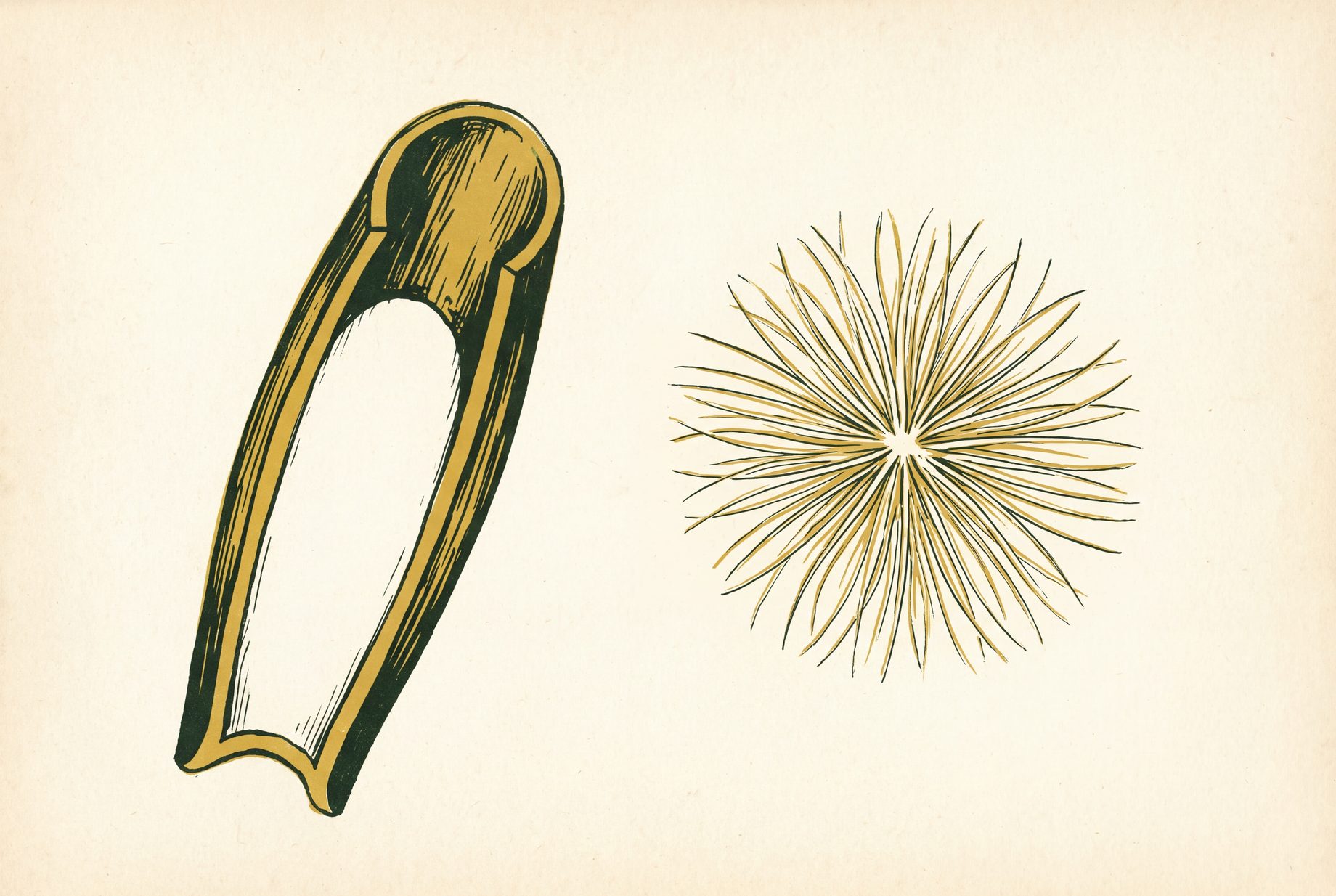
Kapok lies firmer and steadier under your head, while down feels softer and shifts more. Both are mostly air. A kapok fiber is a thin-walled tube, and in one measured sample the hollow core took up roughly three-quarters of the fiber's volume (Industrial Crops and Products). That sealed air keeps the pillow light for its size. The same paper describes kapok as a lignocellulosic fiber with a hydrophobic waxy coating over its hollow structure, and that coating is why raw kapok sheds water.
Down has no core at all. Each cluster is a tuft of fine filaments spreading from a central point, and the air sits between those filaments rather than inside them. The better the down, the more air a given weight of it can trap, which is what the fill power grade describes (Wikipedia, Fill power).
You feel that difference as soon as you lie down. The wall of a kapok tube seals its air in, so the fiber stays light, but the smooth tubes lie against one another and can pack together under your head. Down keeps its air because the filaments spring apart, so how well your down pillow recovers depends on how springy those clusters are. If you want the fiber itself explained in more depth, our guide to what kapok is, and what a kapok tree is covers the tube, the pod and how much of the fiber is air.
Why does a kapok pillow need about twice the fill weight of down?
Sellers list close to twice the weight of kapok as of down for the same pillow. Kapok packs closer, so it takes more weight.
Fill weight is the clearest published difference between the two, because sellers list it for each firmness. The table puts US standard-size pillows side by side.
| Standard pillow, 20 x 26 in | Soft or light | Medium | Source |
|---|---|---|---|
| Kapok, zippered, cotton sateen case | 1.5 lb | 2 lb | Carolina Morning on Etsy |
| Goose down | 11 oz | 16 oz | Bettenhaus |
| Wild goose down | 14 oz | 19 oz | Bettenhaus |
| Goose down, high fill power | 12 oz | not listed | All About Down on Etsy |
| Our reading: kapok weight divided by down weight | about 1.7 to 2.2 times | about 1.7 to 2 times | Judgement, worked from the rows above |
No maker publishes that ratio. It is our arithmetic on their own figures. Kapok tubes nestle together, while down clusters hold each other apart. So more kapok is needed by weight to reach the same height. The pillow feels heavier in the hand. If you want a firm kapok pillow, expect it to weigh more again, since one seller lists its firm and extra-firm standard pillows above its medium (Carolina Morning on Etsy). On a listing, the fill weight says more about height than the firmness label does, because a weight is a number two pillows can be compared on.
How do kapok and down compress and recover under your head?
Down is graded by how far one ounce springs back in a test cylinder. Kapok has no such grade, and sellers say it packs down with use.
Down has a standard recovery test. A lab conditions a set weight of down, places it in a tall cylinder under a weighted plate with small holes, and records the volume the down fills beneath it (Wikipedia, Fill power). Fill power is given in cubic inches per ounce. On a label you will see where it falls on a scale that runs from feathers at the low end to the best goose down at the top.
Kapok has no equivalent grade. That means two kapok pillows cannot be compared on recovery from a number. Sellers publish a warning instead. One says kapok has a natural tendency to revert back into its tight pod-shape density (CozyPure), and another tells buyers that silky soft kapok will naturally compact over time (Satara Home).
In practice you get two different habits. A down pillow collapses under your head and puffs up again when you shake it. A kapok pillow keeps a firmer, steadier shape through the night. One fiber seller says kapok pillows do not need to be punched in the middle of the night and retain their shape well (DIY Natural Home). Over months, though, kapok slowly packs down and needs fluffing and topping up, which is why most kapok pillows come with a zipper. Our guide to how kapok behaves under a head, night by night follows that change week by week.
What happens when kapok or down gets wet?
Kapok's waxy skin sheds water, but a soaked kapok pillow is slow to dry. Down can often be machine washed; feather pillows vary by maker.
The kapok fiber resists water on its own. Researchers found that the hydrophobic-oleophilic characteristics of the kapok fiber could be attributed to its waxy surface, while its large lumen contributed to its excellent oil absorbency and retention capacity (oil sorbent study, PubMed). Water beads up on a single fiber.
A pillow full of fibers behaves differently once water gets inside. One maker warns buyers not to wash loose-fill kapok pillows because they will clump, and kapok fiber is very hard to dry once soaked (Soaring Heart). Another says that even after a trouble-free wash, the fill will take a very long time to dry, and that dampness raises the chance of mildew (Savvy Rest). A third claims kapok fiber is naturally moisture-resistant and dries quickly if it gets damp (Sachi Organics). Both claims can hold at once. A damp surface dries fast, but a soaked core of packed tubes holds water for a long time.
Down is more often sold as washable. One Seattle maker lists its standard down pillow as machine washable (All About Down on Etsy). A feather pillow maker says the opposite: spot clean only; do not wash to preserve natural feather oils and reduce breakage/poke‑through (Down & Feather Co.). Whether you can wash a pillow depends on its maker's listing more than on the fill type. For either fill, a zippered protector you can wash does most of the work, and our care pages cover the routine.
What do kapok sellers say about washing the fill?
We read eleven pages from kapok sellers. Most tell you not to wash the fill, a few allow it, and some never mention washing at all.
We read 11 product and care pages published by kapok pillow and kapok fill sellers on September 25, 2026. We sorted each one by what it tells you to do with the fill itself, not the cover. We only counted what each page says, and we did not wash or test any pillow.
- Advise against washing the fill: 6 pages
- Allow washing the fill, with or without conditions: 2 pages
- Say nothing about washing the fill in the text we read: 3 pages
| Seller page | What it says about the fill | Bucket |
|---|---|---|
| Soaring Heart | Do not wash loose-fill pillows | Against |
| CozyPure | Do not machine wash and dry | Against |
| Sachi Organics | Avoid machine washing the fill | Against |
| Savvy Rest | Wash the pillowcase instead | Against |
| Satara Home | Do not wash; the fiber can clump | Against |
| Pikkow | Machine washing not recommended | Against |
| kapok.com.au | Not needed; if you must, spin and tumble dry well | Allow |
| HunnmingRe on Amazon | Fill can be machine washed | Allow |
| Carolina Morning on Etsy | Fill weights and firmness only | Silent |
| Layla | Kapok and foam blend; no fill washing advice | Silent |
| Avocado | Fluff or add fill; washing advice covers latex | Silent |
Sellers' reasons vary too. Pikkow says kapok fibres are highly absorbent and can become clumpy when wet, which sits badly with the research on kapok's waxy surface. If a pillow you are weighing falls in the silent bucket, ask the seller before you buy.
What did mite studies find in kapok and down?
Feather pillows gathered less mite allergen than synthetic ones in several studies. We found no kapok pillow study, only a mattress one.
The old advice was to keep people with allergies away from feathers, and the research has not backed it. In a New Zealand trial, researchers placed a synthetic and a feather pillow together on each of a dozen beds for a year. By the end the synthetic pillows held about three times the mite allergen of the feather ones (Rains et al., PubMed). A US study found mite allergen in most unprocessed feather samples but in none of the commercially processed ones. Processed feather pillows stayed clean after months in mite-heavy bedrooms (Dryer et al., Annals of Allergy, Asthma & Immunology).
For kapok, the closest evidence is a Thai trial that placed new mattresses of kapok, synthetic fiber, coconut fiber and polyurethane foam in a hospital dormitory. Mite allergen built up significantly faster in the kapok and synthetic mattresses than in coconut fiber or foam (Siriraj study, PubMed). A mattress is not a pillow. Treat that result as a caution rather than a verdict. Kapok can also cause allergies itself: a JAMA paper from nearly a century ago was already describing cottonseed and kapok sensitization (Brown, JAMA).
If you have a mite allergy, the step with trial evidence behind it is an encasing. In one randomized trial, encasing mattresses and pillows brought a significant long-term drop in mite allergen in the mattresses and cut the need for inhaled steroids in children with asthma (randomized trial, PubMed).
How are down and kapok pillows labeled in the United States?
A pillow sold as down must hold at least 75% down cluster. Kapok has no matching grade for purity or recovery, so you rely on the seller.
Down labeling in the US follows an industry standard with clear numbers. A product labeled "Down" must contain a minimum of 75% down cluster, and the percentage of down must be listed on the label (American Down and Feather Council). Fill power is optional, and according to IDFL it is not required on the law tag label (IDFL labeling questions and answers). That gives you two things you can check on a down pillow: the cluster percentage and, often, the fill power.
Kapok gives you less to check. Your kapok pillow still needs a label. A law label is required on pillow and bedding products filled with any fiber, foam, feather, down or animal hair, and those labels are enforced at the state level (Hobby Lobby vendor label requirements). We found no agreed purity test or recovery grade for kapok. Sellers describe their fiber as wild-harvested, untreated or organic, and you are taking their word for it.
Kapok fiber may be every bit as good as the seller says. It simply has no grade on paper. When you compare kapok pillows, lean on the seller's own statements: the fill weight, where the kapok comes from and the care advice.
How do the four differences show up in bed?
Kapok lies firmer and is set by hand through a zip, while down collapses softly and puffs back up each time it is shaken.
The table sums up the four differences and what each one means in bed. It is our judgement, drawn from the sources cited above, and it is not a ranking.
| Way they differ | Kapok | Down | What it means for you |
|---|---|---|---|
| Fill weight for the same height | About twice the weight | Lighter for the same height | Kapok feels denser and heavier in the hand |
| Recovery | Holds shape overnight, packs down over months | Springs back, graded by fill power | Down reshapes each time you move; kapok needs fluffing and topping up |
| Water | Fiber sheds water; soaked fill dries slowly | Often washable; check the listing | Plan on washing the cover, not the kapok |
| Allergens and labels | No pillow study; no purity grade | Processed down tested clean; down cluster minimum | Use an encasing with either fill |
Height is where the differences add up. Kapok's weight and zipper let a tall pillow be set by hand and topped up as it settles. A down pillow reaches its height by springing apart. It sits tall after you shake it and sinks under you through the night. If you sleep on your back, both fibres can give a medium height with some give. If you sleep on your stomach, you need the least height, which means a soft down pillow or a kapok pillow with some fiber taken out. Whichever fibre is in the case, the neck responds to height rather than to the material, and a zipper is what lets that height change.
Common questions
Short answers to the questions people ask most about kapok and down, from warmth and shedding to price and topping up the fill.
Is kapok warmer than down?
We found no study comparing the two in pillows. Textile research reports that kapok blended with cotton showed better warmth-retention and water vapor transmission properties owing to the highly porous structure of the kapok fiber (mini review).
Does a kapok pillow shed fibers?
It can when you open it. One seller warns that kapok fibers are easily airborne and suggests covering your eyes and nose while adjusting fill (CozyPure).
How do prices compare?
They overlap. One maker's kapok pillows start from $ 115.00 (Holy Lamb Organics). A feather pillow maker puts mass-market down and feather blends at $40–$130 (Down & Feather Co.).
Can you add kapok later?
Yes, if your pillow has a zipper. One seller notes that kapok will settle a little over time and suggests adding more through the zip as needed (kapok.com.au).
Can you buy a 100% down pillow?
Not by label. A labeling guide says never say "100% down": Labels can't make that claim. (American Law Label).
Is kapok a vegan fill?
Yes. Kapok fiber belongs to a typical cellulosic fiber, which is obtained from the seed hairs of kapok trees, so no animal is involved (The Fine Structure of the Kapok Fiber).
The kapok check works through answers like these to a specification: kapok in place of down: what changes, and how much to use.
Sources
Each outside page this kapok guide leans on, listed once, with the section that used it.
- Industrial Crops and Products (sciencedirect.com), used in “What makes kapok and down different materials?”.
- Wikipedia, Fill power (en.wikipedia.org), used in “What makes kapok and down different materials?”; “How do kapok and down compress and recover under your head?”.
- Carolina Morning on Etsy (etsy.com), used in “Why does a kapok pillow need about twice the fill weight of down?”; “What do kapok sellers say about washing the fill?”.
- Bettenhaus (bettenhauscanada.com), used in “Why does a kapok pillow need about twice the fill weight of down?”.
- Bettenhaus (bettenhauscanada.com), used in “Why does a kapok pillow need about twice the fill weight of down?”.
- All About Down on Etsy (etsy.com), used in “Why does a kapok pillow need about twice the fill weight of down?”; “What happens when kapok or down gets wet?”.
- CozyPure (cozypure.com), used in “How do kapok and down compress and recover under your head?”; “What do kapok sellers say about washing the fill?”; “Common questions”.
- Satara Home (satarahome.com), used in “How do kapok and down compress and recover under your head?”; “What do kapok sellers say about washing the fill?”.
- DIY Natural Home (diynaturalhome.com), used in “How do kapok and down compress and recover under your head?”.
- oil sorbent study, PubMed (pubmed.ncbi.nlm.nih.gov), used in “What happens when kapok or down gets wet?”.
- Soaring Heart (soaringheart.com), used in “What happens when kapok or down gets wet?”; “What do kapok sellers say about washing the fill?”.
- Savvy Rest (savvyrest.com), used in “What happens when kapok or down gets wet?”; “What do kapok sellers say about washing the fill?”.
- Sachi Organics (sachiorganics.com), used in “What happens when kapok or down gets wet?”; “What do kapok sellers say about washing the fill?”.
- Down & Feather Co. (downandfeathercompany.com), used in “What happens when kapok or down gets wet?”; “Common questions”.
- Pikkow (pikkow.com), used in “What do kapok sellers say about washing the fill?”.
- kapok.com.au (kapok.com.au), used in “What do kapok sellers say about washing the fill?”; “Common questions”.
- HunnmingRe on Amazon (amazon.com), used in “What do kapok sellers say about washing the fill?”.
- Layla (laylasleep.com), used in “What do kapok sellers say about washing the fill?”.
- Avocado (avocadogreenmattress.com), used in “What do kapok sellers say about washing the fill?”.
- Rains et al., PubMed (pubmed.ncbi.nlm.nih.gov), used in “What did mite studies find in kapok and down?”.
- Dryer et al., Annals of Allergy, Asthma & Immunology (sciencedirect.com), used in “What did mite studies find in kapok and down?”.
- Siriraj study, PubMed (pubmed.ncbi.nlm.nih.gov), used in “What did mite studies find in kapok and down?”.
- Brown, JAMA (jamanetwork.com), used in “What did mite studies find in kapok and down?”.
- randomized trial, PubMed (pubmed.ncbi.nlm.nih.gov), used in “What did mite studies find in kapok and down?”.
- American Down and Feather Council (downandfeathercouncil.com), used in “How are down and kapok pillows labeled in the United States?”.
- IDFL labeling questions and answers (alliedfeather.com), used in “How are down and kapok pillows labeled in the United States?”.
- Hobby Lobby vendor label requirements (docs.hobbylobby.com), used in “How are down and kapok pillows labeled in the United States?”.
- mini review (sciencedirect.com), used in “Common questions”.
- Holy Lamb Organics (holylamborganics.com), used in “Common questions”.
- American Law Label (americanlawlabel.com), used in “Common questions”.
- The Fine Structure of the Kapok Fiber (researchgate.net), used in “Common questions”.